
The Technological Framework for Integration: From Declarations to Real Localization
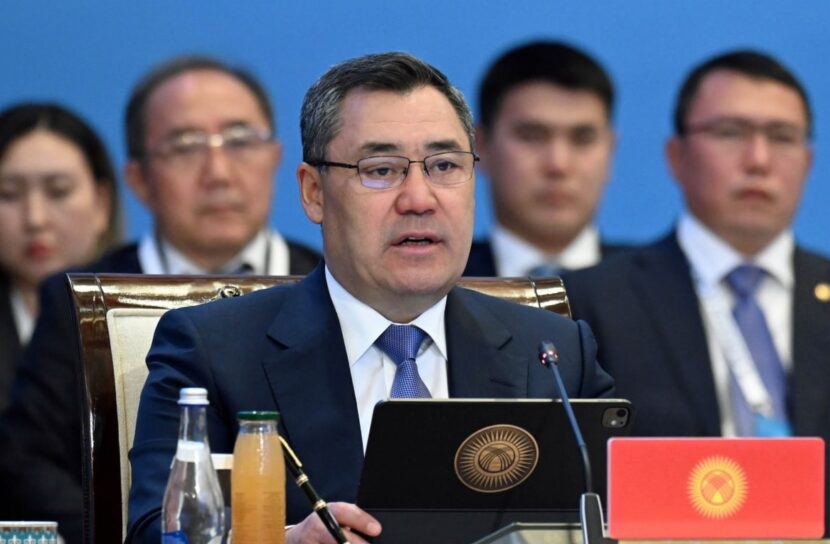
— The global economy is entering a period of profound and large-scale transformation, characterized by intensifying geoeconomic competition, accelerating technological change, and a revision of established models of international cooperation, — stated President of the Kyrgyz Republic Sadyr Japarov at a meeting of the Supreme Eurasian Economic Council (SEEC). This statement, made by the Kyrgyz leader during the central event of the Eurasian Economic Forum on May 29, 2026, sets a fundamentally new vector for the development of the entire integration association over the next decade.
The Eurasian Economic Forum, held in Astana, clearly demonstrated that traditional trade and logistics models have exhausted their extensive resources. Today, EAEU member states are required not simply to passively adapt to external sanctions and geopolitical pressure, but to proactively shape their own sovereignty. The key element of this new architecture is the end-to-end digitalization of the real sector of the economy and the large-scale implementation of artificial intelligence systems.
In this context, Bishkek takes a sober pragmatist stance. The global market's transition from a paradigm of universal globalization to a fierce struggle for national economic stability and technological sovereignty is forcing the Union's small economies to seek new footholds. While integration was previously perceived primarily as the removal of customs barriers to the movement of goods, the current landscape demands joint scientific and technical design.
The Kyrgyz side's particular emphasis on digital interoperability and the creation of joint big data platforms indicates a strategic understanding of future challenges. Competition has shifted from the ownership of raw materials to the speed of innovation. The EAEU possesses colossal fundamental potential, but its realization is impossible without the formation of a unified technological partnership. The introduction of AI into industry and the agro-industrial complex can create a synergistic effect, eliminating the gap with third countries.
However, the key challenge for the Union remains the depth of small and medium-sized businesses' involvement in macroeconomic processes. Currently, industrial cooperation and interest rate subsidies remain the prerogative of large holdings. Countries with small economies urgently need mechanisms that encourage the localization of joint high-tech production capacities within their territories.
As Sadyr Japarov rightly noted:
— Market liberalization should not result in vulnerability for domestic producers. Global experience is clear. Opening markets without simultaneously strengthening the production base leads to a loss of industrial potential.
This is precisely why the Eurasian Economic Commission's localization incentive mechanism, expected by the end of the year, must become the institutional foundation for equalizing economic potential within the EAEU. The transition from disparate production chains to a unified, protected industrial space is the only way to preserve sovereignty in the face of global turbulence.
The expansion of the EAEU's network of trade agreements with Iran, China, the UAE, and, potentially, India and Tunisia, opens up unprecedented markets. However, the real sector will only realize the practical value of these agreements when the digital infrastructure and compliance models within the Union function smoothly. The future of the Eurasian space depends on the ability to integrate science, education, human capital, and artificial intelligence into a single, coherent economic framework.
Text adapted by AI. Should it lack clarity, read the original RU-ver.
Own.info
Business Eurasia