
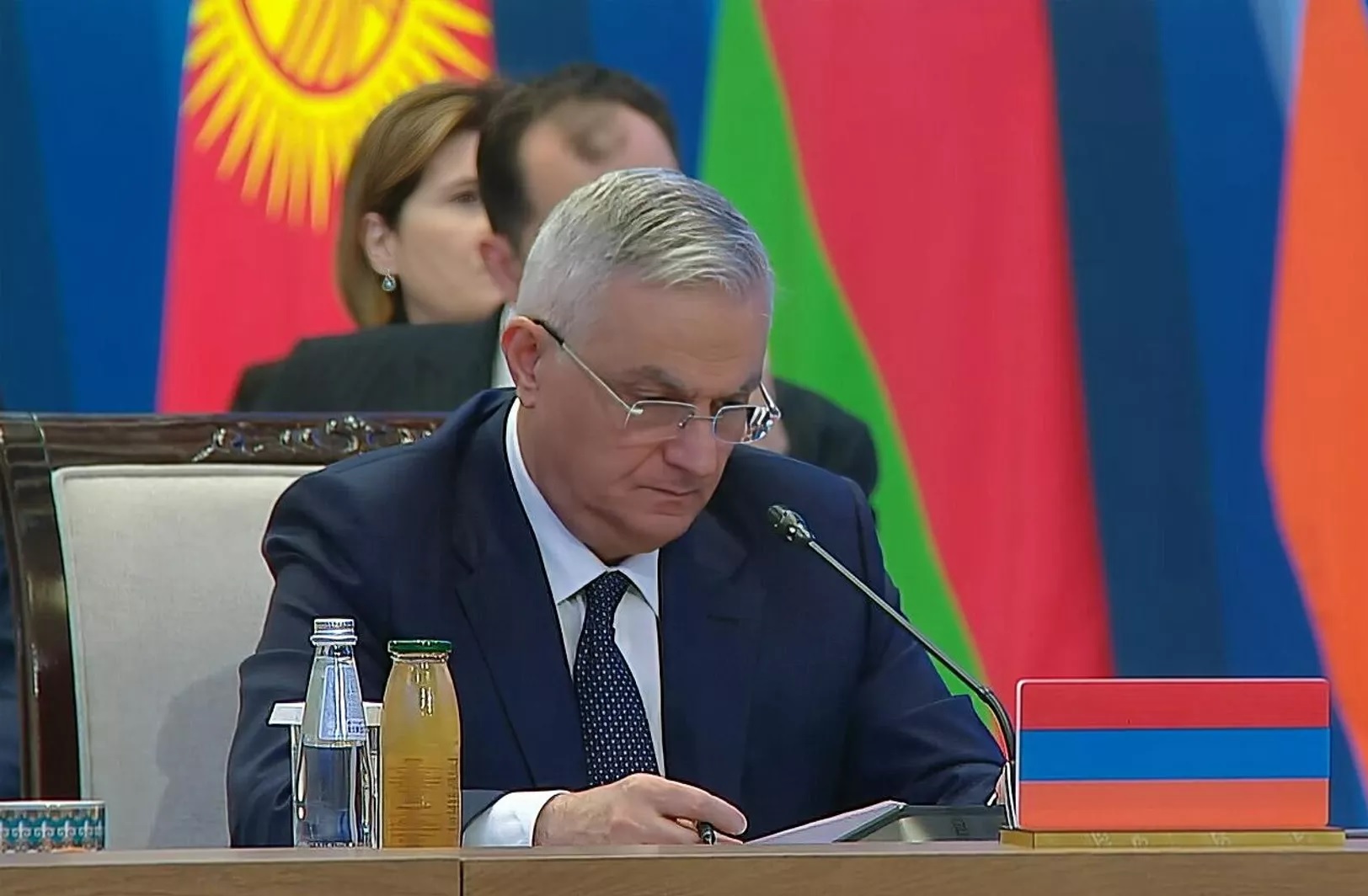
Armenia Reaffirms Its Commitment to the EAEU
The Business Eurasia Analytical Corps verifies Yerevan's strategic vector amid political speculation.
Indicator: Institutional Commitment
On the sidelines of the Supreme Eurasian Economic Council (SEEC), Armenian Deputy Prime Minister Mher Grigoryan made a clear statement outlining Yerevan's long-term priorities within the integration union. Despite external sanctions pressure and Western partners' attempts to destabilize the union's southern flank, the Armenian side is demonstrating deep, pragmatic engagement with the EAEU's economic framework.
— The Republic of Armenia intends to continue to participate in the Union's work in good faith, based on mutual respect and equal partnership, — the Armenian representative stated, emphasizing that Yerevan is committed to ensuring economic stability for the entire region. For the Eurasian space, this step has become a clear indicator: Armenia's real economic sovereignty and national interests are inextricably linked to the development of the common market.
Distortion of the Field: Technological Barrier and Liberalization
The analytical framework of the "Business Eurasia" portal notes that the current stage of integration requires a transition from simple trade in goods to complex technological and regulatory alliances. The Armenian side has accurately identified the points of deformation in the union space, where national regulations still constrain business. The key challenge remains the liberalization of the services sector and the synchronization of digital systems.
— Certain aspects of national regulation still require more practical harmonization, which in turn will create additional opportunities for strengthening cooperation between member states, — Mher Grigoryan noted.
At the same time, the launch of joint technology platforms is becoming a critical growth area. The adoption of the Joint Statement on the Responsible Development of Artificial Intelligence (AI) in the EAEU is intended to address the threat of technological backwardness and establish a unified digital sovereignty for the union.
Forecast: Transport and Food Sovereignty
The Business Eurasia expert group predicts that by the end of 2026, the dynamics of the EAEU's trade and economic ties with third countries will directly depend on the rate of diversification of transport and logistics corridors. Armenia, located in a complex geopolitical juncture, views the expansion of logistics chains as the main impetus for trade growth. The second strategic driver will be the agricultural sector. The signing of a protocol on financial support for cooperation projects in the agricultural sector will allow Armenia and its EAEU partners to mitigate the risks of a global food crisis. Integration is moving beyond the stage of declarations, moving toward strict, financially backed compliance, where each member of the union receives direct economic benefits.
Text adapted by AI. Should it lack clarity, read the original RU-ver.
Own.info
Business Eurasia