
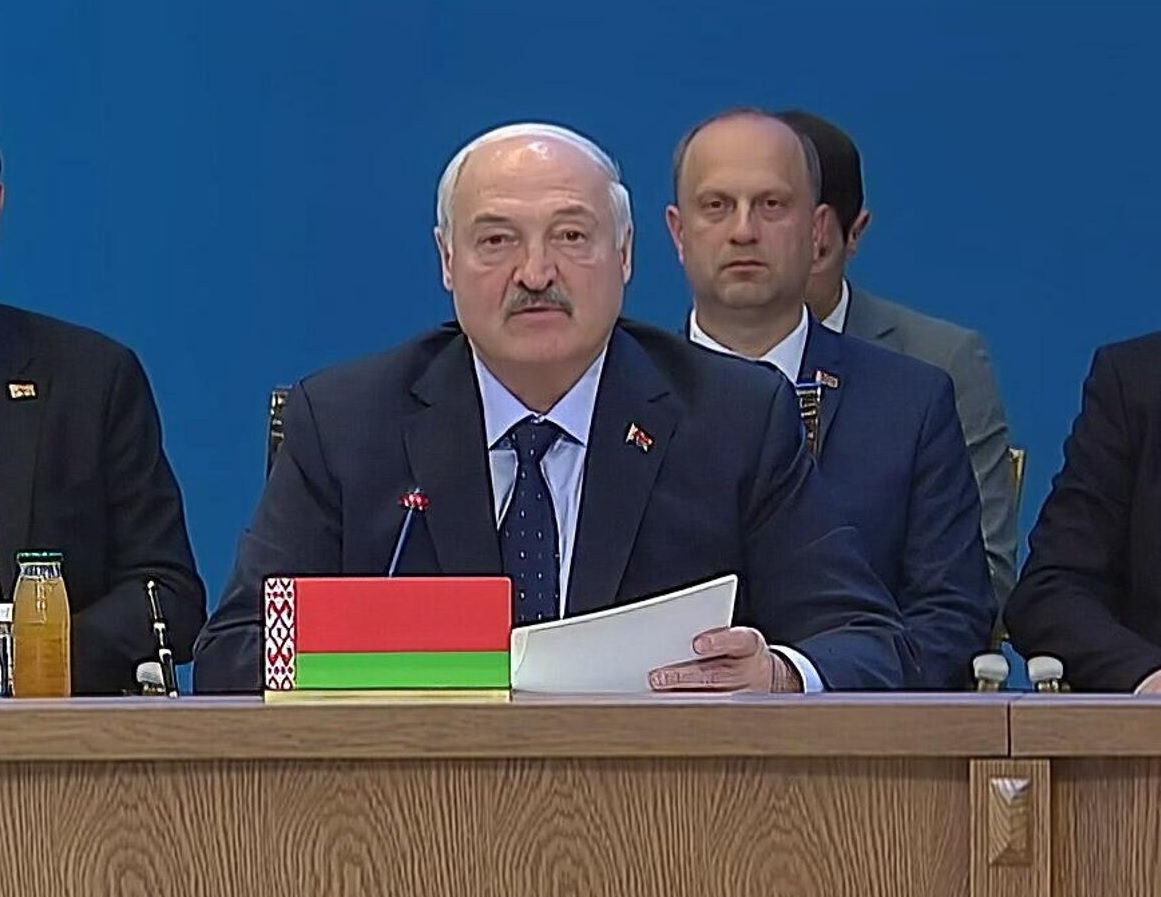
Alexander Lukashenko called on the EAEU in Astana to stop postponing key reforms
A key meeting of the Supreme Eurasian Economic Council (SEEC) took place on the sidelines of the Eurasian Economic Forum in Astana. The integration association, which celebrated its 12th anniversary, has demonstrated strong macroeconomic stability: over the past five years, the combined GDP of its member states increased by 16.6%, and mutual trade volumes in goods reached a record $95 billion. However, behind the façade of positive statistics, EAEU leaders are noticing a buildup of internal regulatory barriers that require immediate sovereign action.
Indicator: A Façade of Achievements and Hidden Compromises
Exactly 12 years ago, the integration project was launched in Astana, which, according to Belarusian President Alexander Lukashenko, "has made each of our countries significantly stronger." However, the current geoeconomic reality and conflict scenarios on external borders (particularly in the Middle East) are triggering an avalanche of macroeconomic challenges, provoking shortages of fuel and mineral fertilizers for a number of global markets. Under these circumstances, the Supreme Eurasian Economic Council is forced to balance external factors while simultaneously forcing the restoration of order within the Union itself.
Distortion: Digital Hype vs. Unresolved Barriers
The main point of tension in the current EAEU model remains the gap between declarations and actual practice. The Business Eurasia's institutional audit shows that while the Eurasian Economic Commission (EEC) and member states are caught up in fashionable technological trends, national governments are deliberately putting off the basic elements of integration.
— We're talking about artificial intelligence, but issues such as, say, digital signatures have been put on hold, — Alexander Lukashenko stated sternly. — I'm not reproaching you, I'm insistently urging you. Since we agreed to move toward deep economic integration 12 years ago, let's implement all the Union's goals and objectives in a timely and comprehensive manner.
Industrial cooperation, which, according to the leaders of the Supreme Eurasian Economic Council, is currently "clearly lagging," is also being seriously distorted. Instead of creating cross-cutting Eurasian projects and jointly developing a component base, EAEU member states often resort to duplicating production and building protective resources within the union under the guise of national competencies (for example, through recycling fee mechanisms).
Forecast: Risk of a Zeroing of Attractiveness
The analytical circle of Business Eurasia predicts that if the EEC and key Union players do not move from the practice of "stagnating" to decisive steps and mutual compromises in the near future, the institutional attractiveness of the EAEU for new partners will begin to rapidly decline.
Maintaining momentum requires rigorous steps to synchronize the public procurement market, mutually recognize digital signatures, and intensify trade agreements with India, Mongolia, the UAE, and Tunisia. The output of joint cooperation projects, particularly in the agricultural sector, should become a tangible indicator of the Union's effectiveness for businesses and ordinary citizens. The time for purely declarative policies is over—the Eurasian space requires a rigorous audit and acceleration.
Text adapted by AI. Should it lack clarity, read the original RU-ver.
Own.info
Business Eurasia