
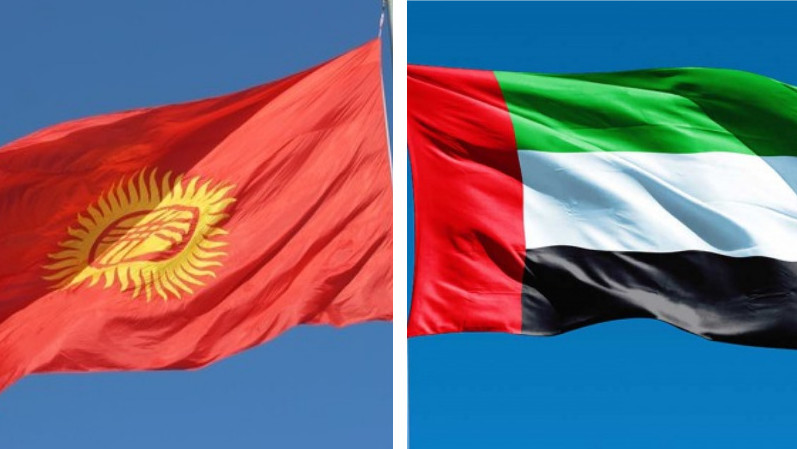
The agreement opens up new opportunities for Kyrgyz exports
As of October 6, an agreement between the Eurasian Economic Union (EAEU) and the United Arab Emirates (UAE) has altered the terms of trade for Kyrgyzstan.
The UAE has granted preferential treatment for 444 out of 498 product categories requested by Kyrgyzstan. These concessions cover food products, agricultural goods, and certain industrial items. Through the EAEU, a collective gateway to the Emirati market has been established for the republic.
The scale of this opportunity is already reflected in trade dynamics. In 2025, trade turnover between Kyrgyzstan and the UAE reached approximately $176 million, with Kyrgyz exports accounting for $124 million—an increase of 61%.
The primary objective now goes beyond mere growth in trade volume; it is about transforming the structure of that trade. Currently, a significant portion of Kyrgyz exports consists of electronics and re-exported goods. At the same time, there is now an opportunity to increase the supply of domestically produced goods.
Priority products include beans, honey, nuts, meat, and meat products. Additional prospects are emerging for grains, dried vegetables, vegetable oil, and dairy products.
This is where the advantage of Kyrgyzstan’s membership in the EAEU becomes clear: the agreement was concluded by the Union, granting all its member states access to the Emirati market. In this framework, Kyrgyzstan leverages its own production base alongside unified Eurasian trade mechanisms.
This creates a series of opportunities for businesses: producers can increase direct shipments to the UAE; processors are incentivized to create goods with higher added value; and logistics operators can integrate Kyrgyz products into broader Eurasian supply chains.
Furthermore, the UAE’s infrastructure offers additional potential, as the country already serves as a major trade and logistics hub for the Persian Gulf region. In October 2026, DP World began construction on a dry port near Tashkent, which will have an annual container capacity of up to 150,000 TEU.
Within this system, Kyrgyzstan gains the opportunity to look beyond its own domestic market. The republic can link its production capabilities with the EAEU, Central Asia, and the logistics network of the UAE. Such a mechanism enhances the value of goods originating from Kyrgyzstan.
At the same time, the Russian direction remains a key element of this model. The Russian market provides Kyrgyzstan with its primary Eurasian scale, while the UAE adds an external trade hub with access to markets in the Middle East and beyond.
Therefore, the significance of this agreement for Kyrgyzstan is not defined by current trade volumes. Instead, the true measure lies in the ability to transform these preferences into sustainable production and export chains. In this context, the UAE ceases to be merely a separate foreign market for Kyrgyzstan; rather, it becomes an additional link in the Eurasian economic system—one that allows Kyrgyz producers to reach markets both through the EAEU and via the Emirati trade hub.
Text adapted by AI. Should it lack clarity, read the original RU-ver.
Own.info
Business Eurasia