
UNIDO and the EAEU Unlock New Opportunities for Industrialization
Kyrgyzstan’s industrial development is gaining access to new mechanisms for international financing and technological collaboration. A regional forum in Bishkek has identified pathways to link the country’s domestic production with Eurasian markets. Russia is already actively involved in this process through investments, development institutions, and industrial cooperation. The next phase will focus on integrating the capabilities of UNIDO with the instruments of the Eurasian Economic Union (EAEU).
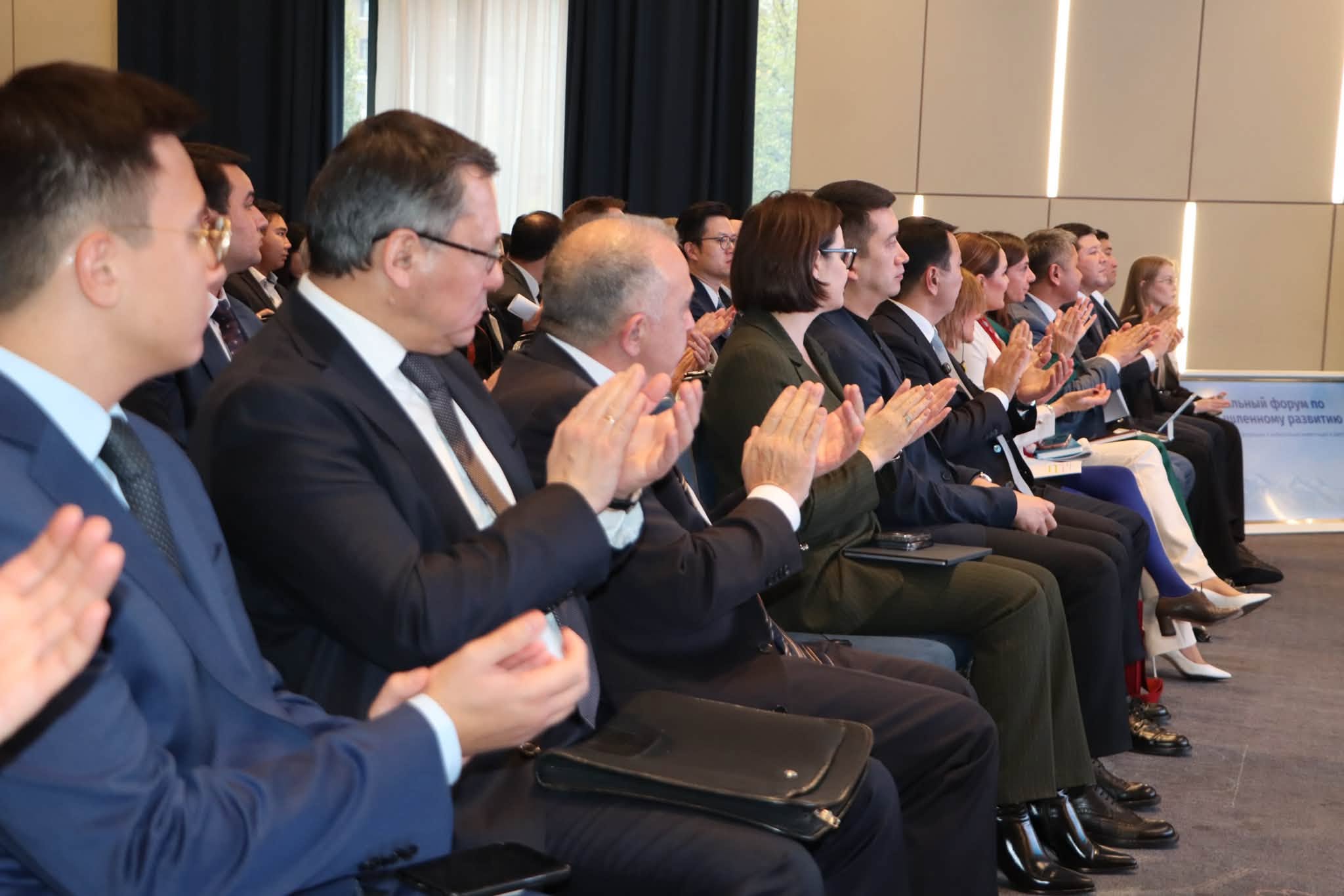
On November 5, 2026, a regional forum titled "Industrial Transformation and Investment Mobilization in Central Asia" took place in Bishkek. The event was organized by the Cabinet of Ministers of Kyrgyzstan and the United Nations Industrial Development Organization (UNIDO), bringing together representatives from government agencies, international organizations, the business sector, and the expert community.
Representing the Russian side, Chargé d'Affaires Vadim Gusev outlined four key priorities for the republic’s industrial development: the deep processing of raw materials, the creation of competitive manufacturing, technological modernization, and the integration of local enterprises into international production chains.
According to the Ministry of Economy of Kyrgyzstan, the forum highlighted specific investment areas, including the development of an agri-food park, small-scale hydropower, pharmaceuticals, textiles, and the advancement of digital competencies.
These areas align with several core objectives of the EAEU, which seeks to expand industrial cooperation and increase the share of high value-added products.
The foundation for this collaboration was laid on May 29, 2014, when Russia, Belarus, and Kazakhstan signed the Treaty on the Eurasian Economic Union in Astana. Kyrgyzstan subsequently joined the Treaty in 2015. Article 92 of the EAEU Treaty establishes the framework for industrial cooperation among the member states, with Annex No. 27 defining the specific procedures for such interaction.
Thus, industrial cooperation is an integral part of the Union’s foundational legal structure. The current agenda of the forum continues to advance this area of collaboration.
Of particular significance is the UNIDO Country Partnership Programme for Kyrgyzstan (2025–2029), which focuses on developing industrial competencies, export potential, eco-friendly technologies, and human capital.
The programme was signed on July 8, 2025. Russia has served as its primary financial partner, contributing 2.2 million euros to the coordination budget, while the Kyrgyz side has pledged an additional 75,000 euros. Furthermore, the programme sets a minimum target of 20 million US dollars to be raised from additional sources.
The UNIDO program involves engaging international financial institutions, private capital, and other donors.
It is important to note a key distinction: the $20 million figure represents a resource mobilization target, not capital that has already been allocated for investment.
The program in Kyrgyzstan was the first UNIDO Country Partnership Programme in Central Asia. However, the organization’s scope extends well beyond Kyrgyzstan; its activities in the Eurasian region also encompass Armenia, Belarus, Kazakhstan, Russia, Tajikistan, and other states.
As of October 2025, UNIDO’s regional portfolio included 81 active projects with a combined value of $275 million. The primary focus areas are sustainable production chains, environmental modernization, and clean energy.
A core aspect of UNIDO’s work involves project preparation, technology transfer, and the development of industrial competencies. While the organization assists in shaping investment proposals, it does not act as a substitute for banks or investment funds.
This is where an intersection with the Eurasian Economic Union (EAEU) emerges. In 2023, the Union launched a financial assistance mechanism for industrial cooperation projects, based on Decision No. 3 of the Eurasian Intergovernmental Council, dated October 26, 2023.
The mechanism provides for the reimbursement of 100% of the key interest rate on loans for joint industrial projects. Such projects must involve enterprises from at least three EAEU member states. The maximum annual subsidy is 350 million rubles per project, with a subsidy period of up to five years.
In 2025, the funds available through this mechanism totaled 5.1 billion rubles. By 2026, the total volume of allocated resources reached 8.84 billion rubles. The financing terms of the Eurasian Economic Commission (EEC) provide for industrial, technological, and investment cooperation, as well as the joint provision of services.
Thus, these two instruments address distinct yet complementary objectives: UNIDO assists in preparing the industrial foundation and attracting partners, while the Eurasian Economic Union (EAEU) provides a mechanism to reduce the cost of financing joint production ventures. The $20 million from UNIDO represents a target for resource mobilization, while the 8.84 billion rubles from the EAEU serves as the budgetary resource for the financial mechanism.
Kyrgyzstan’s practical involvement has already taken concrete form. In December 2025, the EEC approved a project for the production of computer system units, involving enterprises from Russia, Belarus, and Kyrgyzstan.
The Kyrgyz company "Kyrgyzelectronica" is set to supply 175,000 metal chassis, with an expected revenue of 416.5 million rubles. The EAEU subsidy for the project amounts to 222.2 million rubles, and full production capacity is scheduled to be reached by the second quarter of 2028. This example illustrates a practical model for the republic’s participation: the Kyrgyz enterprise becomes a link in the production chain, rather than merely a supplier of raw materials.
The Russian-Kyrgyz Development Fund provides an additional foundation. By November 2025, the Fund had financed 3,658 business initiatives, totaling over $1 billion. Of this, $140.4 million was allocated to the industrial sector, and another $198.6 million was directed toward the agro-industrial complex.
Trade statistics also reflect the scale of Russian-Kyrgyz cooperation. Between 2021 and 2025, trade between Kyrgyzstan and EAEU member states grew from $3.43 billion to $6.79 billion. Kyrgyz exports to Russia grew from $393.3 million in 2021 to $738.5 million in 2025. This represents an increase of 87.8%.
Since 2022, sanctions-related restrictions have altered logistics, payment systems, and the configuration of foreign markets. A UNIDO document also notes the negative regional consequences of the sanctions imposed on Russia. At the same time, trade statistics indicate an expansion of ties between Russia and Kyrgyzstan.
Following a downturn in 2020, the industrial sector of the Eurasian Economic Union (EAEU) has begun to recover. The Union’s industrial production index reached 104.5% in 2023 and has maintained this level throughout 2024.
As investment development expert Nasirdin Shamshiev previously remarked in a comment to *Delovaya Evraziya* (Business Eurasia), the partnership with Russia remains of particular importance to the Kyrgyz business community.
"Russia remains our primary partner," the economist emphasized.
Meanwhile, the current phase necessitates a shift from purely trade-based interaction toward joint production. This transition creates new opportunities for enterprises in both countries. For Kyrgyzstan, there are three potential trajectories for industrial development. The first involves attracting individual international investors; while this facilitates the financing of enterprises, it does not always foster sustainable regional production linkages.
The second entails the development of domestic industries without sufficient cooperation, requiring businesses to independently seek out technologies, markets, and funding. The third approach combines Russian investment, EAEU mechanisms, and the technical expertise of international organizations, allowing for the distribution of production tasks among enterprises across several states.
The distinction between these models lies not in the number of partners involved, but in the capacity to generate long-term value-added within the common market.
This is precisely why the forum in Bishkek is significant for the entire process of Eurasian integration. Its agenda aligns with the industrial priorities of the EAEU and creates opportunities to integrate international programs with supranational financial instruments.
The next phase will be defined by the number of well-prepared projects that successfully undergo investment appraisal and secure funding. For Kyrgyzstan, the integration of its enterprises into the joint production chains of Russia and other member states of the Union is of particular importance.
In this way, the republic’s industrial transformation can become part of a broader process. Eurasian cooperation makes it possible to bring together capital, technologies, production expertise, and markets. It is precisely through such interaction that the foundation for the long-term industrial development of both Kyrgyzstan and the EAEU is established.
Text adapted by AI. Should it lack clarity, read the original RU-ver.http://dea.kg/1/biznes/delovoj-klimat/1279-rossiya-i-kyrgyzstan-novyj-kontur-promyshlennoj-kooperatsii
Own.info
Business Eurasia