
The Eurasian Economic Commission Extends Protective Duties to Support Local Factories
The Eurasian Economic Union is strengthening industrial sovereignty through trade defense mechanisms. The EEC's decision on Chinese imports is aimed at stabilizing domestic production amid global turbulence.
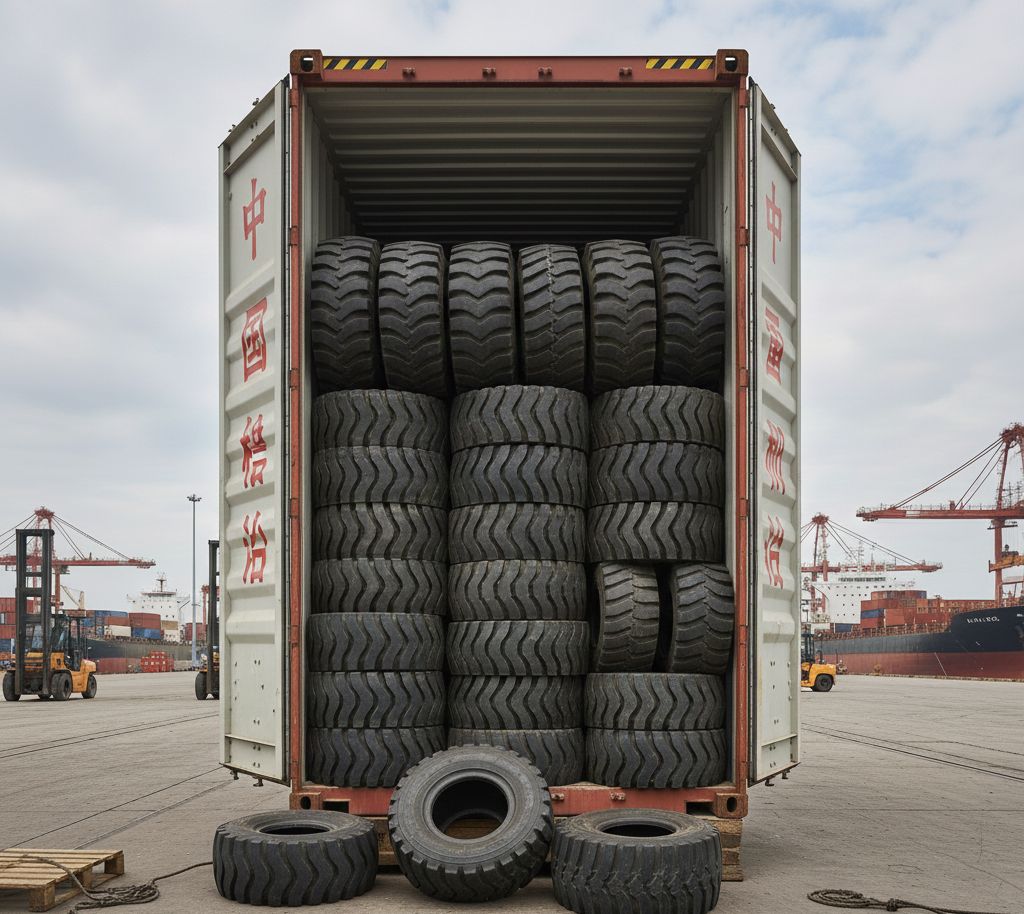
On March 24, 2026, the Board of the Eurasian Economic Commission (EEC) decided to extend the anti-dumping duty on truck tires from China until November 13, 2026. The measure, which was set to expire in June, has been retained pending a re-investigation initiated by leading manufacturers in the union. Details of the decision are published on the official EEC website.
— The EAEU regulatory framework provides for an extension of the measure for the duration of the investigation, which must be completed within 12 months, explained the EEC trade bloc to the editors of Business Eurasia.
According to the documents, the tariffs range from 14.79% to 35.35% depending on the manufacturer.
The issue dates back to 2015, when Decision No. 154 first introduced barriers to protect Belshina, Cordiant, and other manufacturers. In 2023, the measures were extended to include complete wheel assemblies to prevent circumvention of the regulations. The current escalation is due to the fact that demand within the EAEU has fallen by 15% since April 2024, while pressure from Chinese imports, whose prices remain below market levels even after tariffs, has only increased.
Analysts emphasize that Eurasian integration is shifting from purely trade cooperation to strict industrial coordination.
— Protectionism within the EAEU is becoming the only way to preserve our technological base. Without these duties, our factories simply won't be able to withstand the price pressure of subsidized exports from Southeast Asia, — said a source close to the industrial sector. — The Eurasian Union is learning to protect its interests comprehensively. Tire duties are not just a tax; they are a tool for leveling the competitive playing field for businesses in Kyrgyzstan, Kazakhstan, and Russia.
Support for these protective measures is also being expressed in Russian business circles. In particular, Evgeny Vinokurov, Chief Economist of the Eurasian Development Bank (EDB), noted in his "Macroeconomic Forecast 2024–2026" that "domestic sources of growth in manufacturing are becoming the driver of the region's GDP amid weakening global demand."
The EEC decision confirms that the EAEU is prepared to sacrifice short-term gains from cheap imports to preserve jobs and production capacity. Integration today is not only about removing barriers internally but also about building a unified security perimeter externally.
Further development of Eurasian industrial policy will require even more fine-tuning of mechanisms to protect the domestic market. Businesses should prepare for a long-term trend toward supporting local producers within the framework of the Greater Eurasian Partnership.
Text adapted by AI. Should it lack clarity, read the original RU-ver.
Own.info
Business Eurasia