
The End of the "Ruble Paradise": The Decline of Eurasian Transit Business
Russia's introduction of special regulations on the export of rubles worth over $100,000 and gold weighing over 100 grams in April 2026 became a "black swan" for the Central Asian financial sector.
The EAEU has realized that the Union has become a "hole" for capital flight. In 2025, the volume of cash rubles crossing the border with Kyrgyzstan and Kazakhstan quadrupled. This money was used to buy dollars at exchange offices in Bishkek, leading to a currency shortage in Russia itself and putting pressure on the som/tenge exchange rate.
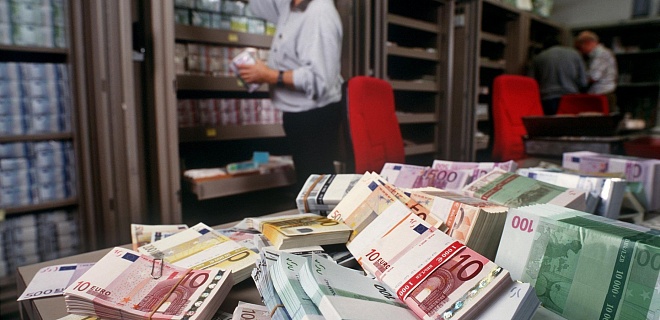
For migrants, the $100,000 limit is not critical, but for "gray" importers purchasing goods by the truckload, it is catastrophic. Payment via "bags of money" is now impossible.
The National Bank of Kyrgyzstan is demonstrating a passive stance. Official press releases ignore the risks to businesses, focusing on "reserve stability." However, experts warn that if the NBKR does not offer a direct ruble-som conversion mechanism at fair rates, businesses will go underground or go bankrupt.
Risks are also predicted for a significant portion of the EAEU employment market: the decline in the ruble's purchasing power in Kyrgyzstan will hit migrant families, causing exchange rate losses of up to 12%.
The likelihood of exchange rate fluctuations could also impact the price of gold, a key element in multi-currency baskets. Thus, in the first days after the Decree came into effect, the global market reacted to financial protectionism in the EAEU.
Russia's restrictions on gold exports from May 1, 2026, have caused a stir in London, Dubai, and Zurich. The ECB and the Federal Reserve consider Russia's measures a sign of the depletion of liquid foreign exchange reserves. The US is strengthening its monitoring of transactions through banks in Armenia and the UAE, suspecting them of facilitating the clandestine export of Russian gold. China and India, the largest consumers of gold, see this as an opportunity for direct interstate transactions, bypassing the private bullion market.
The ban on individuals exporting more than 100 grams of gold sharply reduces supply on the gray market. This is driving up the global gold price, as Russian gold can now only enter the market through state channels or accredited banks, simplifying its origin tracking.
Analysts are calling Decree No. 193 Russia's final transition to a "closed financial fortress." For Eurasia, this means the need for an accelerated transition to the EAEU digital currency, as cash payments are ceasing to be a tool for regional trade.
Text adapted by AI. Should it lack clarity, read the original RU-ver.
Own.info
Business Eurasia