
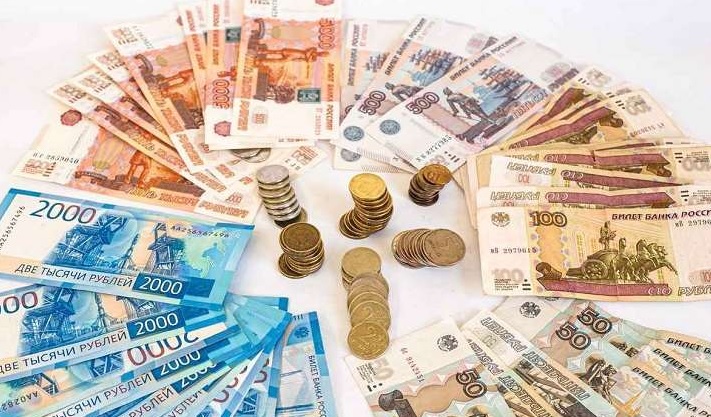
Moscow Restricts the Export of Rubles and Gold to Protect the Union's Market
Russia is tightening controls on cross-border capital flows within the Eurasian Economic Union. Decree No. 193 introduces a permit-based procedure for the export of cash rubles and gold. These measures are aimed at eliminating "gray" schemes and stabilizing the EAEU's financial system.
Published on March 25, 2026, the document establishes strict limits on the movement of physical assets. According to the decree, the goal is to "suppress speculative attacks and mirror capital outflows" through neighboring states. The accompanying note emphasizes: "The cash ruble has become a tool for circumventing systemic controls, which creates excessive pressure on the exchange rate within the Five."

Until 2022, the EAEU had a "$10,000 standard," allowing for the free movement of funds for labor migration and small businesses. However, the sanctions burden on the Russian banking sector has changed the landscape. Kyrgyzstan and Kazakhstan have become major hubs for servicing Russian imports. According to the Eurasian Development Bank, a stable re-export channel emerged in 2024-2025: cash rubles were exported to Bishkek, converted into dollars, and sent to China or the UAE.
A source close to Kyrgyzstan's financial regulator told Delovaya Eurasia that the excess ruble supply created risks to the stability of the som. The situation reached a peak when gold began to be used as a means of illegal cross-border payments.
In turn, Russian business circles see the restrictions as a necessary measure. Transparency of financial flows is key to business survival under sanctions, when entrepreneurs must shift from "bags of cash" to digital financial assets and direct interbank settlements.
At the same time, economists characterize the existing model of interaction as fragile. Small businesses' dependence on cash is a weak point in integration. In the absence of open, legal, and affordable channels for converting the ruble-som currency pair, bans and restrictions risk making logistics more expensive.
A solution may lie in the introduction of digital currencies by the central banks of EAEU countries, which would, to a certain extent, minimize the risk of secondary sanctions and maintain trade volumes.
In addition to foreign currency, refined gold is subject to special controls. As of early 2026, Russia had accumulated approximately 2,600 tons of the metal in reserves. Kyrgyzstan, thanks to active purchases of Kumtor products, has increased its reserves to 50 tons. The new rules effectively close the window for private individuals to export bullion to Turkey and Dubai.
Analysts point out that gold is ceasing to be a marketable commodity and becoming a "strategic non-exportable reserve." This is forcing market participants to switch to the CIPS system or use exchange instruments in Shanghai and Moscow.
The response of global regulators remains muted. The ECB views Moscow's steps as a transition to a mobilization economy. For the EAEU countries, a period of rigorous adaptation is entering: the creation of transparent conversion mechanisms is becoming a matter of national security.
Integration is moving from a phase of spontaneous market interaction to a regime of strict state administration. The further development of the Eurasian partnership now directly depends on the speed of digitalization of payment gateways.
Industry analysts are recording a tectonic shift: Eurasian integration is finally losing its characteristics as an "offshore zone" for Russian capital, transforming into a protected financial perimeter.
Text adapted by AI. Should it lack clarity, read the original RU-ver.
Own.info
Business Eurasia