
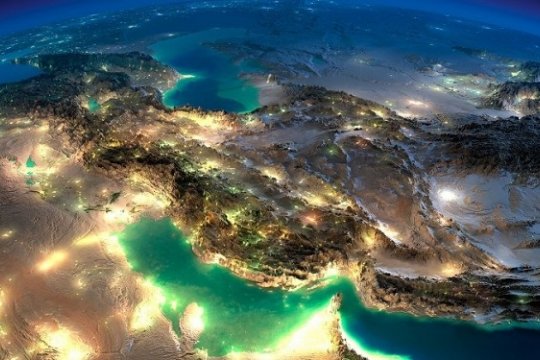
The EAEU Connects Kyrgyz Production with Persian Gulf Capital
Kyrgyzstan now has the opportunity to increase exports of its own domestic products to the Persian Gulf markets. New trade preferences within the Eurasian Economic Union (EAEU) and the investment infrastructure provided by the Eurasian Development Bank (EDB) are establishing an economic foundation for this growth. The primary benefit for the republic lies in transforming its agricultural potential into export-oriented production.
On November 10, the EDB presented investment projects from Central Asia to investors from the Gulf states. The opening of a representative office in Abu Dhabi and the development of the Bank’s investment ecosystem are expanding the region’s access to international capital.
For Kyrgyzstan, this process coincides with a new phase in its trade relations. An agreement between the EAEU and the United Arab Emirates (UAE) has been in effect since October 6, 2026. The UAE has granted preferential terms for 444 out of the 498 product categories requested by Kyrgyzstan. As previously noted by Business Eurasia in an analysis of the new UAE market, the republic has gained significant new opportunities for exporting food and industrial goods.
Specifically, there is strong potential for beans, honey, nuts, meat, dairy products, vegetable oil, and dried vegetables. Processing these goods within Kyrgyzstan boosts export revenue, creates jobs, and expands the tax base. Furthermore, the development of packaging, storage, and transportation facilities generates additional economic benefits.
The scale of these opportunities is reflected in trade dynamics. According to the EDB, trade turnover between Kyrgyzstan and the Gulf states reached $185 million in 2025. However, a substantial portion of shipments to the UAE currently consists of the re-export of electronics. Consequently, the greatest potential for growth lies in expanding the export of goods produced domestically.
This is where investment interest comes into play. The EDB’s funds—CACPEF, CADIF, and Altaira—provide mechanisms for attracting capital into Eurasian projects. For Kyrgyzstan, this represents a potential channel for financing agro-processing, the energy sector, and industrial infrastructure.
The Russian dimension adds further scale to this model. Kyrgyz enterprises can leverage the republic’s production resources, cooperation with Russian partners, and access to the EAEU market. Meanwhile, logistics links with the UAE provide an additional gateway to the Middle East.
Consequently, Kyrgyzstan faces a choice: to maintain a model primarily focused on trade, or to develop export-oriented manufacturing. The key criterion for investment appeal becomes a project’s ability to integrate local raw materials, Eurasian cooperation, and access to external markets.
It is precisely this combination that transforms the EAEU’s agreement with the UAE from a mere trade preference into a tool for Kyrgyzstan’s industrial and economic development.
Text adapted by AI. Should it lack clarity, read the original RU-ver.
Own.info
Business Eurasia