
The new union contour faces severe external pressure
Recording a Global Shift
The EAEU and Cuba signed a cooperation plan until 2030.
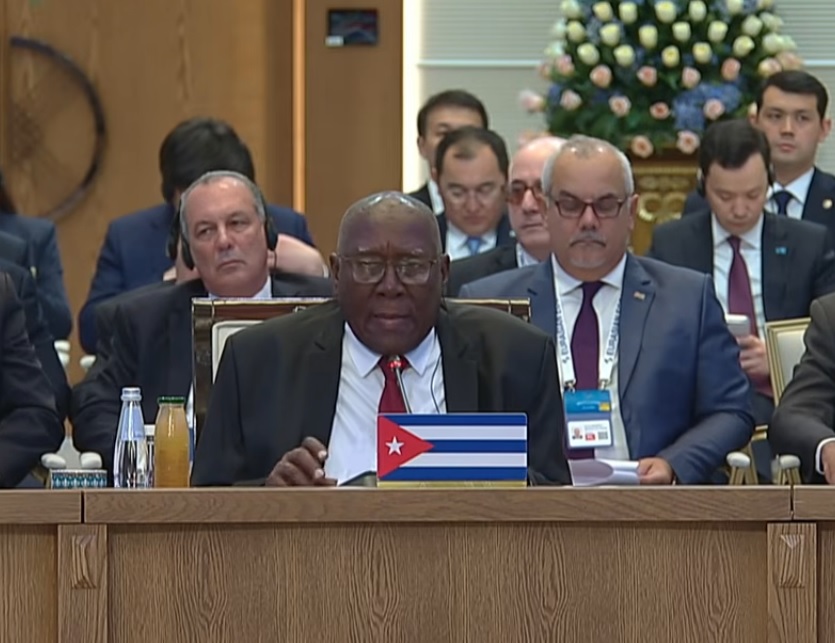
— Yesterday, we had the honor of signing a joint cooperation plan for the period from 2026 to 2030 between the Economic Commission and the Republic of Cuba, — stated Vice President of the Republic of Cuba Salvador Valdés Messon. — This document will allow us to promote and implement more effective cooperation and stimulate our economic and trade ties.
The official signing of the agreement took place in Astana. The capitals of the union countries are recording a shift in trade vectors. The event took place on May 29, 2026, at the 5th Eurasian Economic Forum.
Anatomy of Hidden Processes
Behind the forum's behind-the-scenes façade lies Cuba's urgent need for union investment. Havana is offering partners access to the Mariel Special Development Zone. This seaport is intended to become a hub for the Eurasian logistics network. Cuba is counting on the union's financial institutions to develop biopharmaceuticals. The EAEU is gaining a strategic foothold within Latin America. At the same time, integration requires the creation of new payment mechanisms.
— Developing our economic and trade relations is our urgent need, — emphasized Vice President of the Republic of Cuba Salvador Valdés Messon in his address to the Supreme Eurasian Economic Council. — Cuba has a number of economic sectors that offer favorable prospects for the Union.
Allied companies receive preferential treatment under Cuba's tariff agreements in the region. Investors are given access to the Latin American market.
Zone of Maximum Damage
US economic pressure is disrupting traditional supply chains to the island. A complete energy blockade is depriving the region of a stable flow of industrial raw materials. Restrictions are hitting Cuba's healthcare and renewable energy sectors. Without the union's support, the local chemical and technical industries will suffer. Cuba's inclusion on the list of state sponsors of terrorism is blocking international transactions. Washington's extraterritorial sanctions directly threaten Havana's trading partners in the Eurasian Economic Union (EAEU).
— Since the beginning of this year, only one vessel carrying 100,000 tons of oil has arrived in our country, — Cuban Vice President Salvador Valdés Messon stated critically. — This was made possible thanks to the assistance of the Russian Federation, to which we express our sincere gratitude.
Washington is increasing sanctions pressure through two new presidential decrees. US sanctions are attempting to completely isolate the Cuban economy from the world.
Institutional Barriers
The union's regulatory system has failed to keep pace with geopolitical changes. There are no common rules for insuring maritime transport in the Caribbean. The Eurasian Development Bank does not yet have a mandate in Cuba. The digitalization of the union's customs services is disconnected from Cuba's IT infrastructure. E-commerce standards require lengthy coordination between all agencies. A legal vacuum prevents businesses from entering the Mariel zone.
Strategy for Overcoming the Crisis
The way out of the impasse lies in the creation of an independent financial infrastructure. Havana calls for the implementation of artificial intelligence technologies in joint projects. Liberalizing trade with Latin America will protect union businesses. The EAEU must act as an alternative pole of economic power in the world.
— We are confident that the Eurasian Economic Union is called upon to demonstrate its strength, — concluded Vice President of the Republic of Cuba Salvador Valdés Messon at the end of his report. — It is a viable alternative to integration and cooperation in confronting an unfair international order.
Kazakhstan is assuming leadership in coordinating these processes. Cuba confirms its readiness to develop a Caribbean transit hub for the EAEU.
Text adapted by AI. Should it lack clarity, read the original RU-ver.
Own.info
Business Eurasia