
The Eurasian Economic Forum in Astana revealed critical governance risks
Technological Fracture
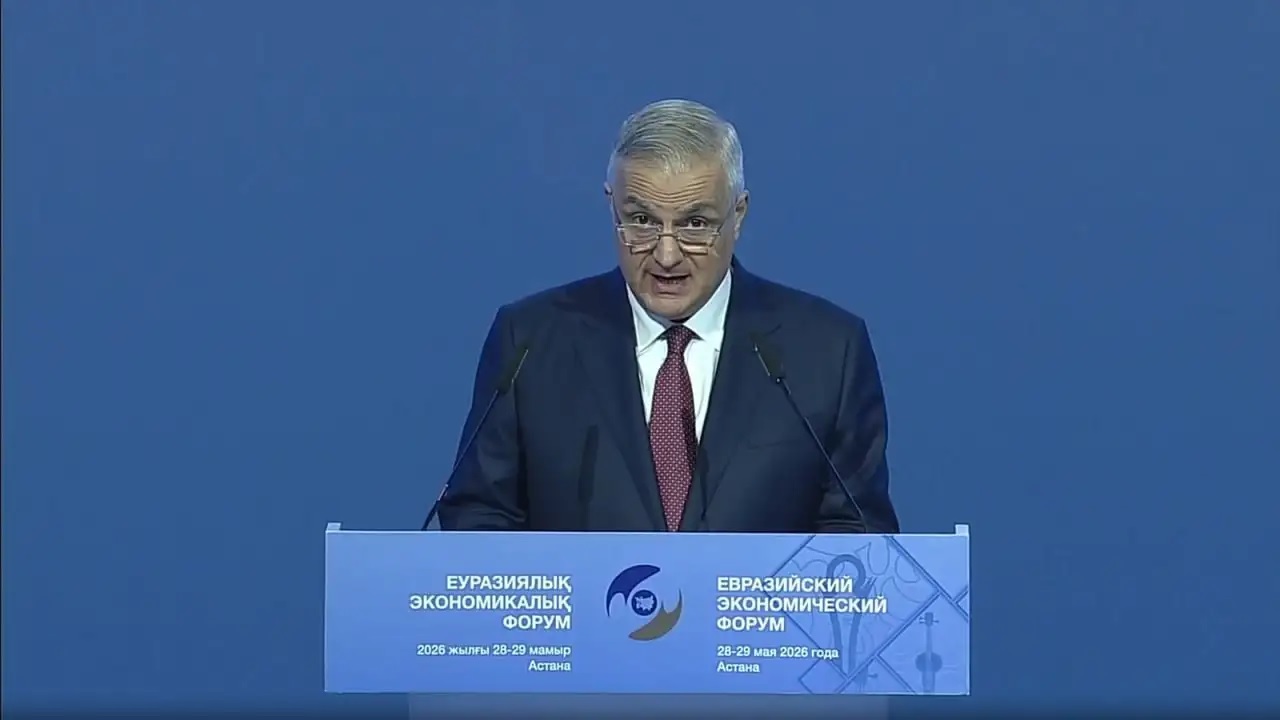
The 5th Eurasian Economic Forum was held in Astana on May 28–29, 2026. At the plenary session, Armenian Deputy Prime Minister Mher Grigoryan outlined new contours of global competition. The union countries are beginning the large-scale integration of machine learning algorithms into government platforms. The discussion focused on the pace of digitalization of the five countries' national economies. However, the declared transition to new standards has exposed deep structural problems within the union.
— We are entering a stage of profound technological transformation, where global competition in artificial intelligence is becoming a crucial factor in the economic and technological sovereignty of states, — Mher Grigoryan emphasized in his speech.
The current pace of innovation is outpacing the capabilities of intergovernmental regulation. Market participants are recording a sharp increase in the gap between AI capabilities and the legal framework. In fact, the union is transitioning to a new technological paradigm without ready-made control tools.
The Underside of Platforms
Behind the grandiose reports of digitalization lies a fierce competition for computing resources. The main AI models are currently being developed by corporations outside the Eurasian space. The EAEU countries risk becoming completely technologically dependent on Western providers. National language models require colossal volumes of specialized data and local supercomputers. Today, the union states primarily use foreign cloud infrastructure for complex calculations. Mher Grigoryan directly pointed out the historical context of this problem.
— Today, we face the challenge of not only training people, but also training machines to understand us, our languages, texts, and cultural heritage.
Without this, local AI systems will lose their cultural and national identity. National governance standards will begin to erode through the algorithms of foreign corporations. Dependence on imported software is becoming a direct threat to the national security of the member states.
Zones of Severe Pressure
The new vector of digital deformation will hit hardest in two directions. The first victim will be the traditional mid-skilled labor market in the financial sector. Algorithms will replace up to 40% of low-level analysts within three years. The second critical point is higher education in the Eurasian Five countries. Universities in the EAEU are unable to train data engineers of the required caliber.
— The state competes not only with technology, but also with the quality of education and the level of development of the scientific community, — the Armenian Deputy Prime Minister stated.
Local businesses are already experiencing a talent shortage in applied mathematics. Large players will begin aggressively luring specialists from the public sector to the private sector. This will lead to the degradation of digital services in departments and ministries. Small IT companies in the region will simply close due to their inability to pay for data center services.
Regulatory Blind Spot
The main danger at the current moment is the complete absence of union standards for AI auditing. The Eurasian Economic Commission lacks the authority to control cross-border algorithmic risks. The national legislation of EAEU countries is developing in isolation from one another. A legal impasse arises over the distribution of responsibility for AI system errors. It is unclear who is responsible for the incorrect automated audit of customs declarations. There are no unified metrics for assessing the security of neural networks used in critical infrastructure. Mher Grigoryan clearly articulated the requirements for the new legal reality.
— It is necessary to create a clear legal framework, ensuring the transparency, explainability, and auditability of algorithms.
For now, these requirements remain mere declarations on paper. The union's current technical regulations do not even contain the concept of end-to-end digital technologies. Regulatory blindness creates conditions for the uncontrolled penetration of dangerous AI products.
Footholds
The way out of the institutional impasse lies in establishing strict ethical rules. The first real step was the signing of a joint document at the forum in Astana. Eurasian countries are trying to create their own trust framework for developers.
— We consider the adoption of a joint declaration on the responsible development of artificial intelligence in the EAEU countries an important step in the development of artificial intelligence technologies, — stated the Armenian representative.
This step demonstrates the region's leaders' readiness to develop unified rules of the game. The Eurasian Economic Commission is now obligated to promptly convert the declaration into specific technical regulations. A network of joint research centers for testing algorithms must be created. The Integration Council must identify single operators of big data pools. Only collective control over infrastructure will preserve the sovereignty of the European Union.
Text adapted by AI. Should it lack clarity, read the original RU-ver.
Own.info
Business Eurasia